Romania’s Double-Currency Mentality: The Euro Mindset in a Leu Economy
23 October 2025 • Investments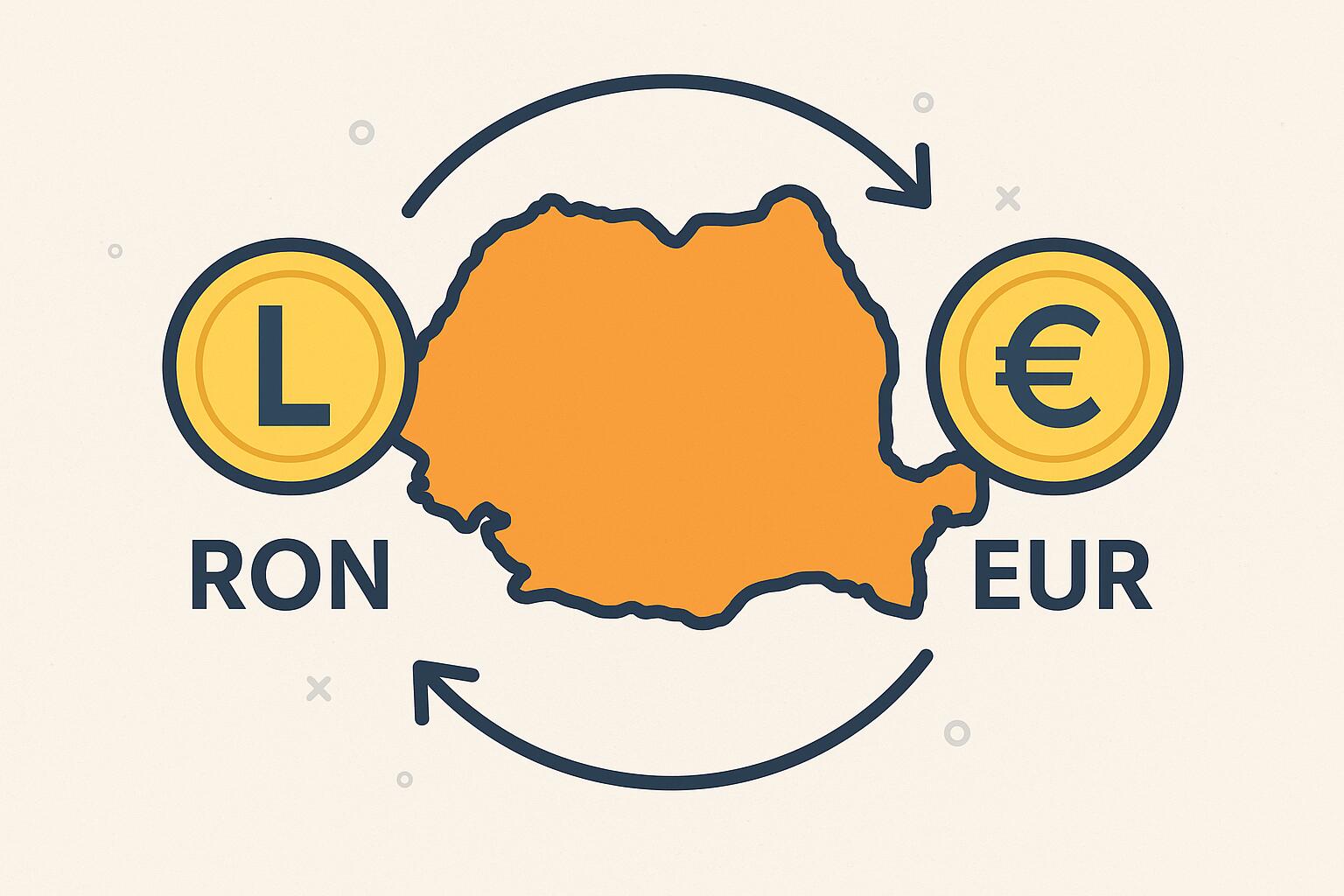
Romania’s Double-Currency Mentality: Understanding the Leu–Euro Duality
Romania officially uses the Romanian leu (RON) as its national currency. Yet in practice, the euro (EUR) dominates how people think, negotiate, and evaluate value. This dual-currency mentality is one of Romania’s most distinctive economic traits — and a reality every foreign investor must understand before entering the market.
Historical Context
Romania joined the European Union in 2007 but has not yet adopted the euro. Decades of pre-accession inflation, currency devaluation, and financial instability left a deep mark on public perception. As a result, the euro became a symbol of trust and financial stability.
Even though the leu is the only legal tender, the euro remains the reference currency for pricing, negotiation, valuation, and strategic decisions.
The Reality of Dual Pricing
Prices in Romania are often expressed in euros but settled in lei, particularly in:
- Real estate transactions and leases
- Automotive sales
- Business-to-business contracts
- Long-term service agreements and construction works
This approach allows parties to maintain a stable value reference while staying compliant with national law, which requires payments between Romanian entities to be made in lei.
In practice, most contracts state:
- “The value of this contract is X EUR, payable in RON at the BNR exchange rate of the payment date.”
- This ensures clarity and protects both sides from major fluctuations.
Exchange Rate Practices and Risk Compensation
The BNR rate (Banca Națională a României – National Bank of Romania) is the official reference exchange rate published daily by the central bank. It reflects the average interbank market rate and serves as the legal and accounting benchmark in Romania.
However, in daily business, different exchange-rate practices are used depending on the type and size of the transaction:
- BNR Daily Rate on Payment Date
- This is the most common and legally safest method.
- The payment amount in lei is calculated using the BNR rate valid on the payment date or on the date of invoice issuance.
- It ensures transparency, consistency with accounting standards, and fairness for both parties.
- BNR Rate + Fixed Margin (Add-on)
- Many landlords, suppliers, and service providers apply a small percentage add-on (usually +0.5% to +2%) to the BNR rate.
- This compensates for:
- Short-term exchange-rate fluctuations between invoice and payment
- Bank conversion fees
- Delays in receiving payment (especially for extended payment terms)
- A typical clause reads:
- “Payment will be made in RON at the BNR exchange rate of the payment date plus 1%.”
- This approach is especially common in long-term B2B contracts and real estate leases, serving as a practical hedge against volatility.
- Using the Bank’s Own Exchange Rate
- Some companies — particularly those with larger transaction volumes — prefer to use the exchange rate offered by their own bank instead of the BNR rate.
- This is understandable, as the actual currency conversion is performed by that specific bank.
- For large amounts (usually above €25,000), it is standard practice to negotiate a preferential exchange rate directly with the bank, often resulting in more favorable terms and lower conversion costs.
- Romanian banks are generally flexible in such cases, especially with established clients or companies maintaining significant operational accounts.
- Fixed Internal Exchange Rate
- For long-term predictability, some contracts set a fixed internal exchange rate (for example, 1 EUR = 5.00 RON) for a defined period, such as six months, with periodic review.
- This simplifies internal budgeting but transfers exchange-rate risk if market conditions change significantly.
Psychological and Economic Factors
Romanians, especially in business circles, often think in euros but operate in lei. The euro represents stability, purchasing power, and European alignment.
Individuals and companies alike benchmark value, income, and property prices in euros, reflecting both historical experience and Romania’s integration with EU markets.
This euro-referenced mindset influences every negotiation, from rent contracts to investment valuations.
Legal Framework
Romanian law requires domestic payments between Romanian legal entities to be executed in RON, but it allows contract values to be expressed in EUR.
The conversion into lei can be made at the BNR rate, the bank’s rate, or under a mutually agreed mechanism.
The BNR exchange rate remains the official and neutral benchmark, published daily and widely trusted in both public and private sectors.
Implications for Foreign Investors
- Pricing and Negotiation
- Expect nearly all major discussions — especially in real estate, professional services, and business investments — to be anchored in euros, even if the payment is made in lei.
- Exchange-Rate Exposure
- Always clarify which rate applies: BNR, BNR + margin, or the banking rate.
- For high-value transactions, negotiate preferential bank rates to avoid conversion losses.
- Perception and Trust
- Quoting and benchmarking in euros demonstrates professionalism, transparency, and alignment with European business standards — critical factors when building credibility in Romania.
- Real Estate and Leasing
- Virtually all property sales, rental contracts, and investment valuations are denominated in EUR, allowing straightforward comparison with other EU markets.
- Investors should understand the currency conversion process and its implications for returns, taxes, and capital repatriation.
Looking Ahead
Romania remains on the path toward future euro adoption, though no official date is set.
Until that transition, the dual-currency mindset will persist — blending national regulation with European financial logic.
Understanding this hybrid system is essential for forecasting accurately, negotiating effectively, and integrating successfully into the Romanian market.
Conclusion
In Romania, the leu is the operational currency, but the euro is the currency of confidence.
Success in this market requires understanding both — respecting the legal framework while adapting to the euro-referenced mentality that underpins nearly every transaction.
To navigate Romania’s unique double-currency environment, investors need more than translation — they need interpretation and strategy.
BLISS Consulting is a trusted partner for international investors, offering tailored insight into Romania’s business culture, negotiation practices, and financial systems.
Our firm operates with a professional and reliable network of consultants, covering nearly all the needs of investors and businesspersons — from legal and fiscal advisory to real estate, market analysis, human resources, and operational support.
Each consultant in our network has proven expertise and years of experience in their respective industries, ensuring that every investor benefits from accurate, practical, and executable guidance.
We assist foreign clients not only in understanding Romania’s business mentality but in successfully operating within it — bridging cultural, procedural, and strategic gaps.
Contact us today: [email protected]
BLISS Consulting — your partner in turning insight into impact, and understanding into opportunity, in Romania’s euro-driven economy.